
Evidence-Based Hair Restoration - Our Mission
Clinical decisions guided by long-term outcomes, not patient request alone.
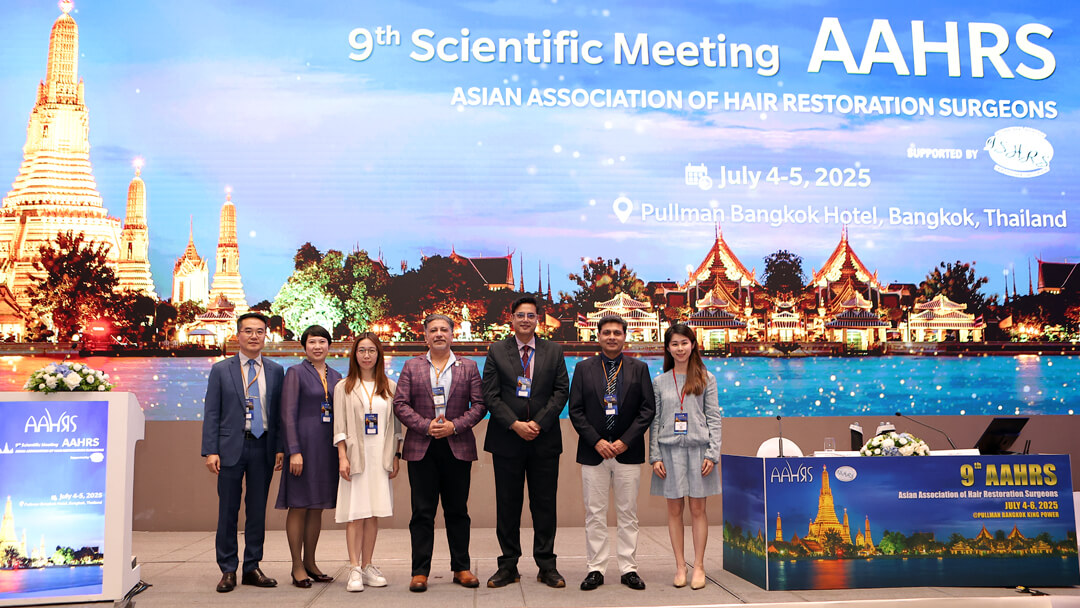
The Basic Requirement in Medical Care
All the standards, trainings, CME ... mentioned here are the cornerstones of ethical medical care, the very basic requirement of any doctor-led hair transplant service providers. They should not be mis-interpreted as "showing superiorities."
2006–2009: Clinical Training Period

Clinical Training Timeline
- 2006: Initiation of FUE procedures in Hong Kong after training in Europe.
- 2007: Temporary suspension of hair transplant services, as outcomes of European techniques on Asian hair types did not meet predetermined criteria.
- 2008: Completion of ISHRS 1-Year Fellowship Training Program under Dr. Damkerng Pathomvanich.
- 2009: Resumption of services following documented achievement of consistent outcomes.
Dr. Pathomvanich is a US Certified Plastic Surgeon. He was the editor of "Hair Restoration Surgery in Asians" (Springer, 2010) and "Practical Aspects of Hair Transplantation in Asians" (Springer, 2018). Dr. Pathomvanich has been director of the ISHRS Fellowship Training Program for over 20 years. He is also the founding President of AAHRS - Asian Association of Hair Restoration Surgery.
Practice Framework

Outcome assessment is based on long-term follow-up, not immediate graft counts. Our practice framework is built on these core principles:
- Donor hair management: Donor hair is a limited resource. Treatment plans account for long-term availability, not just immediate needs.
- Procedure volume: Protocol prioritizes graft survival over procedure speed or graft count. Quality over quantity.
- Case selection: Clinical assessment determines suitability. Some individuals may not be candidates. Decisions are based on medical assessment, not patient request alone.
- Before medical treatment: Some individuals receive medical treatment to stabilize hair loss prior to surgical consideration.
- Medical supervision: Consultation, hair restoration procedure, and aftercare are conducted by registered medical physicians.
- Medication compliance: All medications used are registered with the Hong Kong Department of Health.
Clinical Responsibilities

- Information disclosure: Patients receive comprehensive information about procedure pros and cons as part of consultation.
- Long-term patient care: Follow-up occurs over multiple years. Some patients initially seen 18 years ago have returned for additional procedures.
- CME: Continuous Medical Education of the medical team is part of our clinical practice.
Statement of Practice
Case selection is based on clinical assessment. Some individuals may not meet criteria for surgical hair restoration as described below.
Patient Selection Criteria

Hair loss patterns progress over time. Clinical follow-up is part of standard practice.
- Selection criteria: A structured clinical assessment determines patient suitability. Criteria include evaluation of donor hair supply, hair loss pattern stability, and general health status.
- Long-term relationship: Hair loss is progressive. Follow-up occurs over multiple years. Some patients initially seen 18 years ago have returned for touch-up procedures.
- Before optimization: Some individuals may need medical treatment to stabilize hair loss before considering procedure. Others may be advised to postpone or decline procedure based on clinical assessment.
- Post-procedure follow-up: Previously transplanted patients may require touch-up procedures or ongoing medical management as part of long-term care.
Clinical Consideration
Individuals seeking density levels beyond donor supply limits, or those not considering long-term maintenance, may not meet clinical criteria for 4G-FUE hair restoration approach.